When does a brand need a refresh? 6 signs and the right process
Changing your logo isn’t a rebrand. Six signs your brand needs a refresh — and how to move forward without losing what you’ve built.
By Dokuzbir
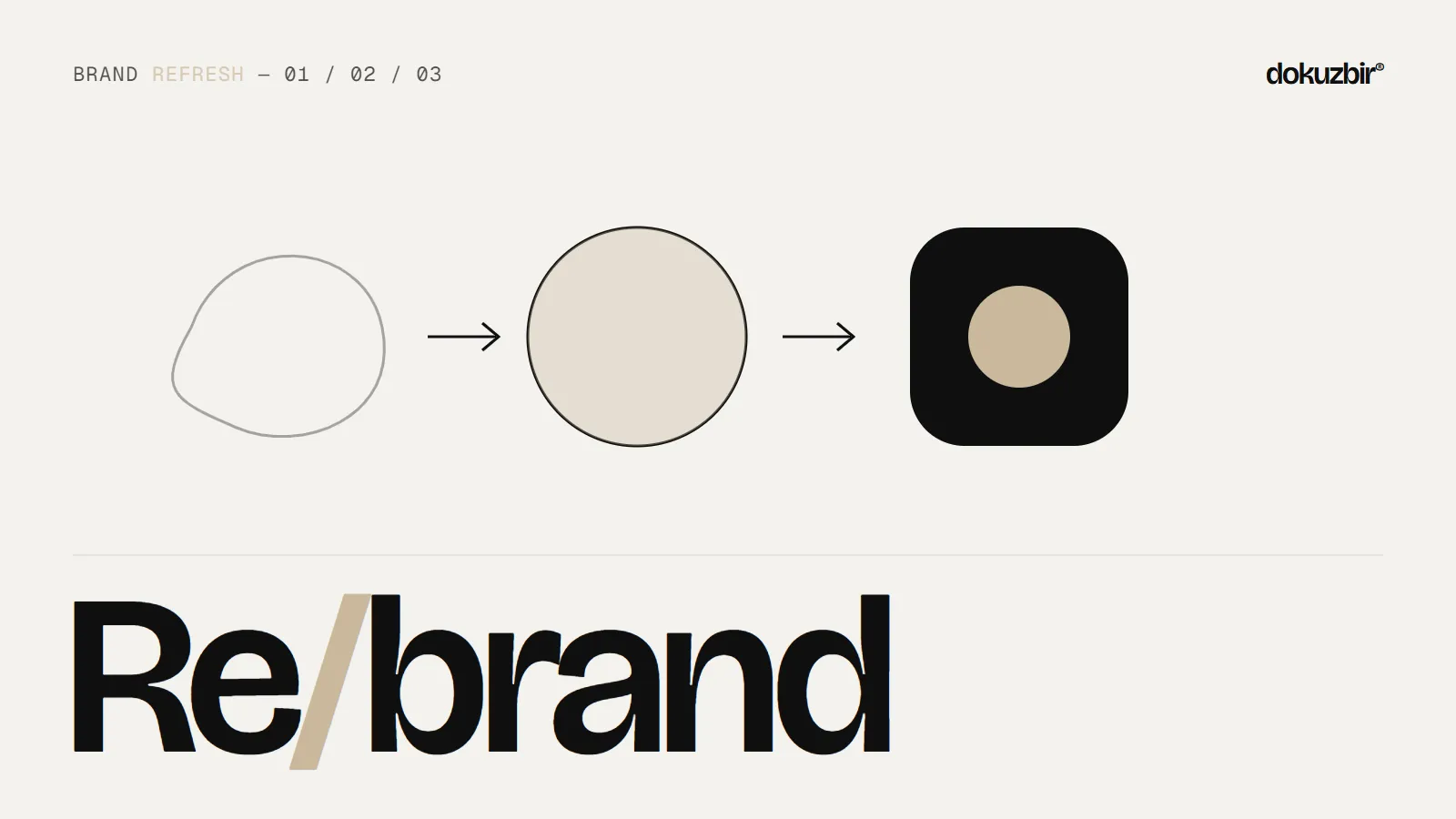
A rebrand usually starts with the sentence “our logo looks dated”. But the logo is only the tip of the iceberg. The real question is: does your brand accurately say who you are today and where you’re going? If it doesn’t, changing the logo alone won’t fix it — it just creates a newer-looking mess.
Six signs it’s time for a refresh
1. Your business changed; your brand didn’t
You added new products, opened up to a different audience or entered international markets. If the brand language of your early days can’t carry this new story, your brand is holding the business back instead of growing it.
2. Your identity falls apart on screens
Is your logo unreadable as an app icon, a 32-pixel favicon, in a vertical video or in dark mode? Identities designed for print often struggle on screen. Today’s identity has to account for motion, small sizes and many platforms from day one.
3. Every touchpoint shows a different brand
If the website uses one colour, social media another typeface and presentations a third language, the problem isn’t discipline — it’s the system. A good identity is a set of rules that makes the right decision easy for the team, every time.
4. People confuse you with competitors
If everyone in your industry uses the same shade of blue, the same icons and similar slogans, the only difference left for the customer is price. Being distinguishable is a brand’s most basic job.
5. Your audience changed
Years ago one generation bought your product; today a different generation makes the decisions. Their expectations, channels and sense of aesthetics are different. Your brand has to speak their language.
6. A merger, a spin-off or a new name
Mergers, a new sub-brand or a name change call for rethinking the brand architecture from scratch. They are also a natural opportunity to rebuild the whole brand system.
Evolution or revolution?
Not every refresh means starting over. The recognition, colours and symbols you’ve built over the years are valuable equity. An evolutionary refresh updates the brand while protecting that equity; a revolutionary rebrand is needed when the business model or positioning changes fundamentally. To choose well, first be honest about what is worth keeping.
How the right process works
- Discovery and audit: current brand perception, competitors, customer interviews and an inventory of every touchpoint.
- Strategy and positioning: who the brand is for, what it promises and how it stands apart — defined in one clear framework.
- Identity system: logo, typography, colour, imagery, motion and tone of voice — designed as one system that works together, not as separate pieces.
- Brand guidelines: rules, templates and examples so the team and partners can use the identity correctly.
- Rollout plan: which asset changes when — from the website to signage, from social media to invoices — and how employees and customers are brought along.
Common mistakes
- Skipping strategy and jumping straight to the logo
- Choosing the identity based only on management’s taste
- Launching without a rollout plan and living with an old/new mix
- Announcing the new brand to customers before explaining it to employees
In short
A rebrand isn’t a new logo; it’s a new system that tells the truth about your business today and tomorrow.
If two or more of the signs above sound familiar, it may be time to put your brand through an audit.
If you’d like an assessment of your brand, write to us.
New posts,
in your inbox.
Once or twice a month: notes on brand, design, digital and AI. No spam, unsubscribe anytime.