How does a brand project work? Six steps from first meeting to handover
The question most often asked before starting a brand project with an agency is: “How will the process work?” We explain what happens at each step from discovery to handover, what we ask of you and what you receive.
By Dokuzbir · Updated
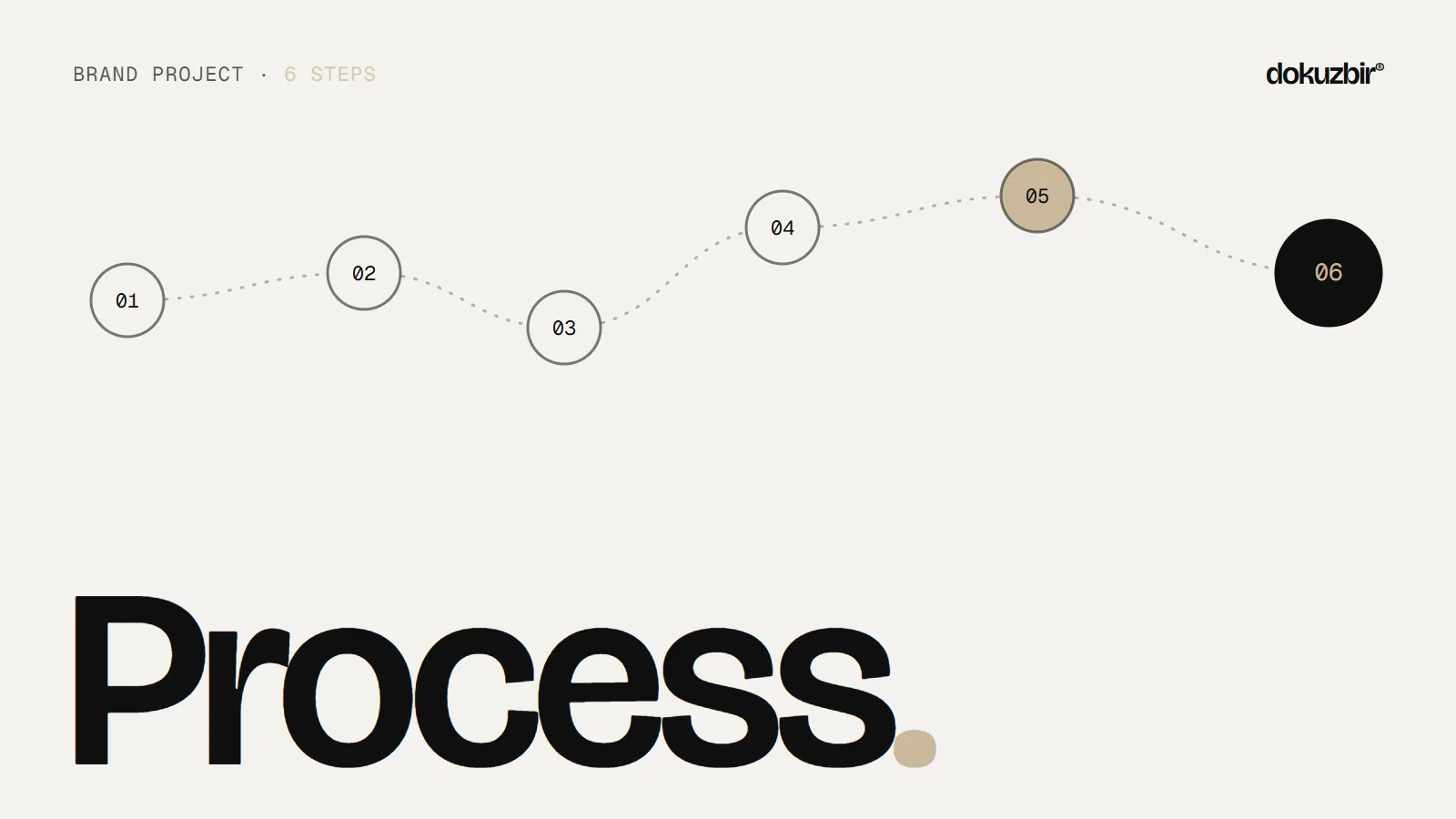
Short answer: A brand project moves in six steps: discovery meeting, research and strategy, creative direction, design and development, rollout, and handover and beyond. Each step ends with a shared decision point; we only move on once the previous step is approved. This structure keeps the project free of surprises and within budget.
What companies about to start a brand project ask most isn’t about design but about process: “What happens when, what’s expected of us, and what will we have at the end?” Here is how a brand project works at Dokuzbir, step by step.
1. Discovery meeting: finding the right question
The purpose of the first meeting isn’t to quote a price but to understand the problem. We talk about where the brand stands today, where it wants to go and what’s in the way. Sometimes a meeting that starts with “we need a new logo” ends with the realisation that the real need is the brand message or the website.
What we ask of you: Existing brand materials, goals, and any previous work.
What you receive: A proposal that clarifies scope, steps and timeline.
2. Research and strategy: why?
Before moving to design, we clarify why the brand exists, who it speaks to and how it stands apart from competitors. This stage includes an industry and competitor review, audience analysis and, where needed, interviews with customers or employees.
What we ask of you: Time with key people on your team, plus customer and sales data.
What you receive: A strategy document covering brand positioning, value proposition, personality and tone-of-voice principles.
3. Creative direction: how will it look and sound?
Once the strategy is approved, we prepare different directions for the brand’s visual and verbal world. Each direction is an interpretation of the strategy, presented with colour, typography, visual language and sample messages. The aim at this stage isn’t the final design but choosing the right direction together.
What you receive: A creative direction presentation and the rationale for the chosen direction.
4. Design and development: building the system
The chosen direction becomes a complete identity system: logo, colour palette, typography, iconography, visual language and usage rules. A logo alone isn’t a brand; it’s part of a system that works consistently at different sizes, on different backgrounds and across channels. That’s why every element is tested in real use cases (website, social media, packaging, business cards).
What we ask of you: Clear, consolidated feedback within the agreed number of rounds.
5. Rollout: bringing the brand to life
Once the identity system is approved, the required applications are produced: website, social media templates, presentation and document templates, printed materials, packaging. Scope varies by project, but the goal is always the same: the brand saying the same thing at every touchpoint.
6. Handover and beyond: you own the brand
At the end of the project, all files are delivered organised and ready to use: vector logo files, colour codes, font information, templates and a brand guidelines document explaining how to use the brand. With it, your team and suppliers can apply the brand correctly without needing the agency. In the first months after launch, we review together how the brand is performing in the real world.
What you receive: All source files, the brand guidelines and templates.
How long does it take?
It depends on scope. Refreshing the visual identity of an existing brand and building a brand from scratch, launched together with a website, need very different timelines. The biggest factor is often the speed of feedback and content preparation, which is why we plan the timeline together in the first meeting.
In short
A good brand project starts with the right question, not with design — and ends with a guideline.
Clear steps, a shared decision at every stage and a complete handover keep the brand consistent long after the project ends. If you’re wondering when a rebrand is needed, read our article on brand refreshes.
Let’s plan the first meeting for your brand: write to us.
New posts,
in your inbox.
Once or twice a month: notes on brand, design, digital and AI. No spam, unsubscribe anytime.